Square Footage Formula for Every Common Shape (Rectangle, Triangle, Circle, L-Shape)
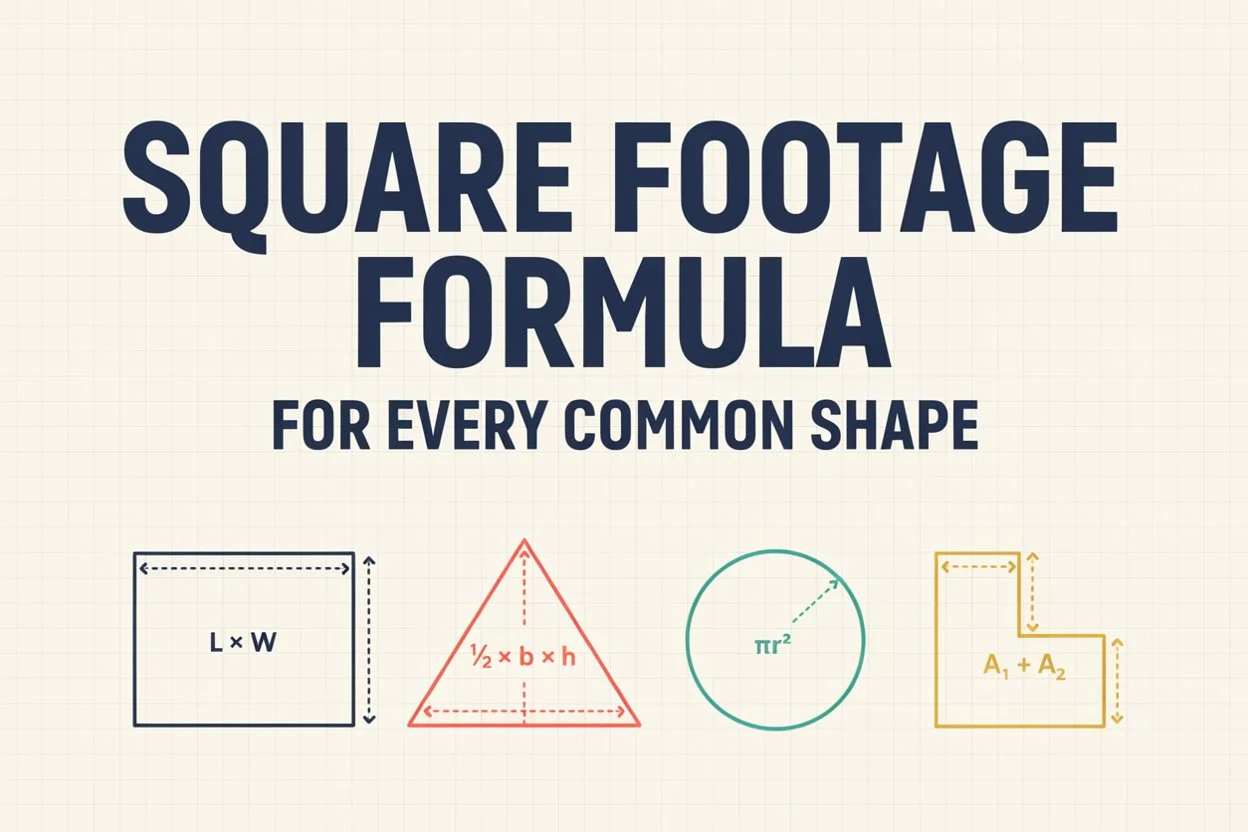
Length times width only gets you through the simplest rooms. The moment a space has a curve, an angle, or an L-shaped floor plan, that one formula stops working — and you need the right one for the actual shape in front of you. Here’s every formula you’re likely to need, in one place.
Every shape’s area formula comes from the same underlying idea — covering a surface completely, without gaps or overlaps — but the arithmetic looks different depending on the shape’s geometry. Get the right formula for your specific shape and the calculation itself is always simple.
Want the answer without doing the math by hand? SquareFootCalc.com calculates all of these shapes instantly — just enter your measurements.
Rectangle
The formula behind nearly every room-specific guide on this site. Measure two perpendicular sides and multiply — no adjustments needed for a true rectangle.
Triangle
Height is measured perpendicular to the base, not along a slanted side
The division by 2 accounts for the triangle being exactly half of the rectangle that would enclose it. The trickiest part is measuring height correctly — it has to run straight up from the base at a right angle, not along the slanted edge.
Circle
Radius is half the diameter — measure across the full circle and divide by 2 if that’s easier
Using π ≈ 3.14159 is accurate enough for nearly any practical purpose. The most common error is plugging in the diameter instead of the radius — square the wrong number and the result comes out roughly four times too large.
L-Shape
Draw one straight dividing line to turn the L into two rectangles
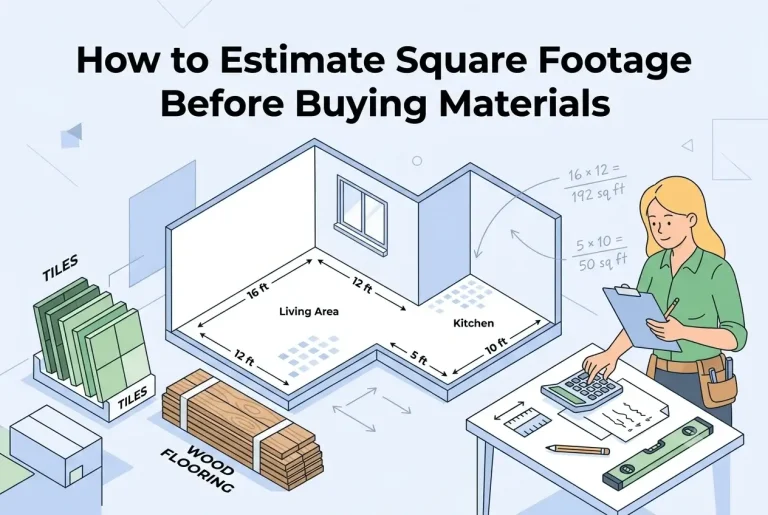
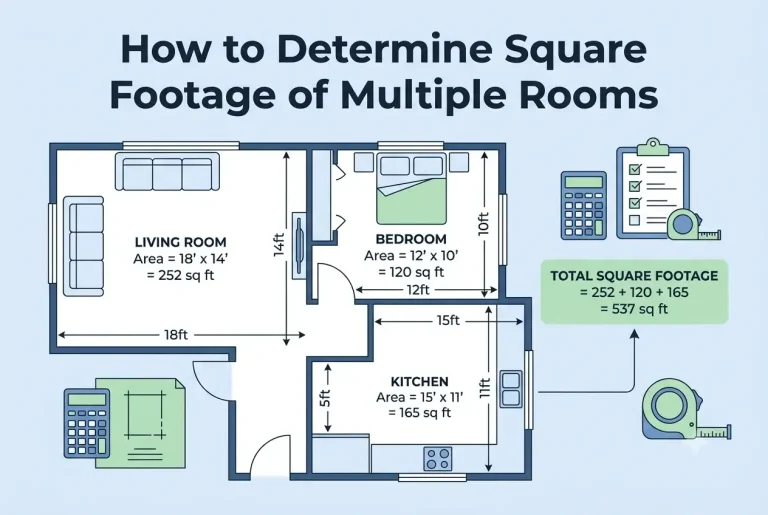
Every L-shaped room is really two rectangles that happen to share an edge. Pick the most natural place to split it — usually where one wall’s length changes — measure each rectangle, and add the two areas together.
More Shapes at a Glance
Worked Examples
Living room, 16 × 13 ft
Attic gable end, 20 ft base, 9 ft height
Round patio, 6 ft radius
Family room + dining nook
Quick Reference Table
| Shape | Formula | Notes |
|---|---|---|
| Rectangle | Length × Width | Most common room shape |
| Square | Side² | Rectangle with equal sides |
| Triangle | (Base × Height) ÷ 2 | Height must be perpendicular to base |
| Circle | π × Radius² | Radius, not diameter |
| L-Shape | Sum of split rectangles | Divide into 2+ rectangles first |
| Trapezoid | ½ × (a + b) × h | a, b = parallel sides |
| Parallelogram | Base × Height | Height perpendicular to base |
| Ellipse | π × a × b | a, b = the two radii |
Mistakes to Avoid
Height must run perpendicular to the base. Using the slanted edge’s length instead overstates the area.
The formula needs the radius — half the diameter. Squaring the full diameter by mistake inflates the result by roughly four times.
There’s no single formula for an L-shape — split it into rectangles first, then add the areas together.
Base × height alone gives the area of the rectangle that would enclose the triangle — the triangle itself is exactly half that.
All measurements for a single shape’s formula need to be in the same unit before you calculate — convert first if any are in inches while others are in feet.
The formula needs the two parallel sides specifically, not just any two sides of the shape — confirm which sides are actually parallel before measuring.
Frequently Asked Questions
There’s no single formula for a fully irregular shape. Split it into simple shapes you do have formulas for — rectangles, triangles, or trapezoids — calculate each section’s area separately, and add them together.
Multiply the base by the height, then divide by 2. The height needs to be measured perpendicular to the base — straight up from it at a right angle — not along one of the triangle’s slanted sides.
Multiply π (approximately 3.14159) by the radius squared. If you only have the diameter, divide it by 2 first to get the radius before squaring it.
Draw a single straight line across the room to split the L into two rectangles. Measure and calculate each rectangle’s area separately using length × width, then add the two totals together for the whole room’s square footage.
No — the geometry is the same regardless of scale. A triangular tile and a triangular attic gable both use base × height ÷ 2. Only the units and the size of the numbers change.
Skip the manual math — calculate any shape instantly.
Calculate Square Footage Free →
Who Luke?
Luke has spent years working around home renovation and construction projects, which is where his obsession with getting measurements right started. One wrong square footage estimate can mean hundreds of dollars wasted on flooring or materials — he learned that the hard way. These days he writes practical guides to help homeowners, renters, and DIYers measure accurately and confidently without needing a contractor to hold their hand.