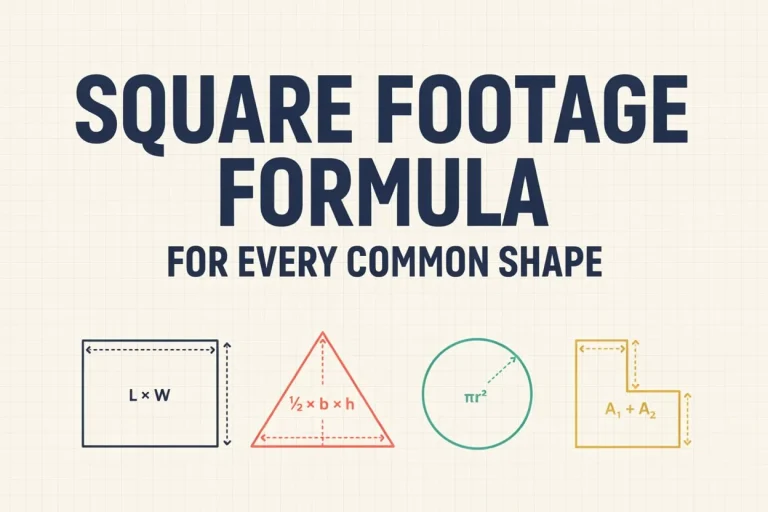

Feet to Square Feet — How the Conversion Actually Works
Type “10 feet to square feet” into a search bar and you’ll get an answer, but not necessarily the right question. Feet measure a line. Square feet measure a surface. You can’t convert one into the other without a second number — and once you understand why, the rest of this conversion stops being confusing.
The Short Answer
You need two measurements — length and width — to get one.
Square footage is a two-dimensional measurement by definition. A single linear measurement in feet — the length of a wall, the height of a door — describes distance in one direction only. There’s no conversion factor that turns a single number of feet into square feet, because the units aren’t measuring compatible things.
Already have both measurements? Use SquareFootCalc.com to calculate the area instantly.
Why Feet Can’t Convert Directly to Square Feet
Unit conversions work when two units measure the same kind of quantity — feet to inches, gallons to liters, pounds to kilograms. Feet and square feet don’t qualify, because they measure different kinds of quantities: one dimension versus two.
A 10-foot line and a 10×10-foot square share the number 10, and nothing else. The line has no area at all — it’s infinitely thin. The square has 100 square feet of area. The confusion almost always comes from assuming the missing second dimension equals the first, which brings us to the actual formula.
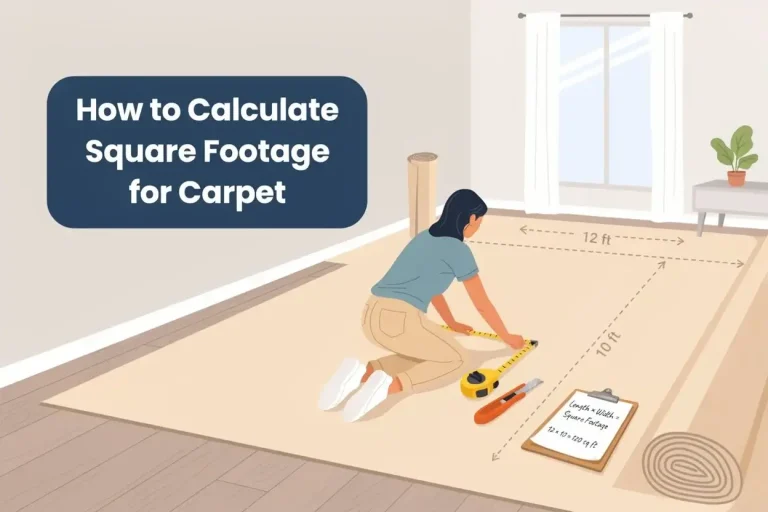
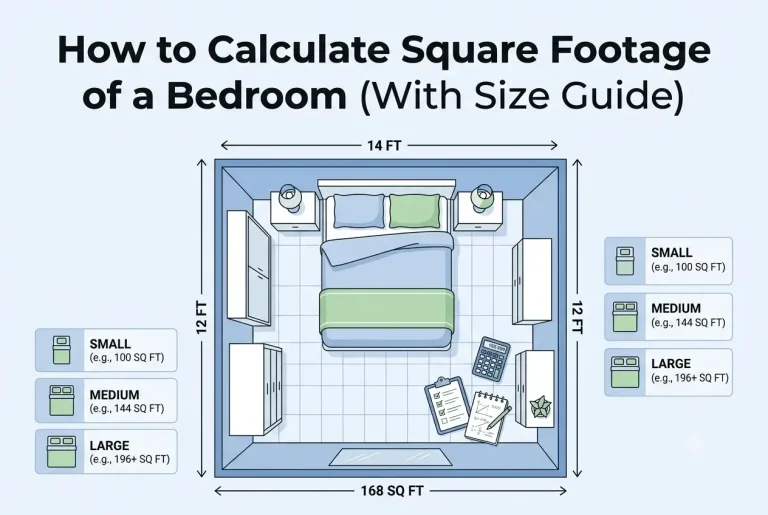
The Real Formula — Length × Width
Both measurements must already be in feet before multiplying
This is the entire formula. There’s no hidden conversion factor, no multiplier to memorize — just two lengths, multiplied together, because that’s what area means geometrically. Everything else in this guide is really about what to do when you’re missing one of those two numbers.
Step-by-Step Process
If You Only Have One Measurement
Sometimes “convert 10 feet to square feet” really does have a specific answer in mind — the person is picturing a square space, where both sides are equal. That’s a valid calculation, just a different one than a straight unit conversion.
Only valid when both sides are actually equal — most rooms aren’t square
Most real rooms aren’t perfect squares — a “10-foot bedroom” is far more likely to be 10×12 or 10×9 than exactly 10×10. Treating a single measurement as both length and width gives you the area of a square, not necessarily the area of the actual room. Always measure both sides when the real number matters.
Worked Examples
12 ft × 11 ft room
“8 feet” with no second dimension given
3 ft × 20 ft hallway
22 ft × 24 ft two-car garage
Try the Converter
Once you have your area in square feet, you may need it in a different unit — square yards for carpet, square meters for an international spec sheet. Convert instantly below.
Area Unit Converter
Enter a value and pick your units — the result updates instantly.
Quick Reference Table
| Length | Width | Area |
|---|---|---|
| 8 ft | 8 ft | 64 sq ft |
| 10 ft | 10 ft | 100 sq ft |
| 12 ft | 10 ft | 120 sq ft |
| 12 ft | 12 ft | 144 sq ft |
| 15 ft | 20 ft | 300 sq ft |
Mistakes to Avoid
There’s no multiplier that turns a single linear measurement into an area — you always need a second dimension.
Squaring a single number only gives the correct area if both sides are actually equal. Most rooms aren’t.
Both measurements need to be in feet before you multiply. A length in feet times a width in inches gives a meaningless number.
Adding the four sides of a room gives you perimeter, in feet. Multiplying length by width gives you area, in square feet. They answer different questions entirely.
Frequently Asked Questions
You can’t convert a single measurement in feet directly into square feet — they measure different things. You need two measurements, length and width, both in feet, multiplied together to get an area in square feet.
This depends on what the second dimension is. If the space is a 10×10 foot square, the area is 100 square feet. If it’s 10 feet by some other width, multiply the two together instead — 10 feet alone doesn’t have a square footage on its own.
Because feet and square feet measure fundamentally different quantities — one dimension versus two. A conversion factor works between units of the same type, like feet to inches. Converting between a one-dimensional and two-dimensional measurement requires an actual second measurement, not a fixed ratio.
Go back and measure the adjacent wall as well. Square footage requires both the length and the width of the space — one measurement alone can only tell you the length of a line, not the area of a room.
Yes, “square feet” and “feet squared” refer to the same unit of area, often written as sq ft or ft². Both describe the result of multiplying a length in feet by a width in feet.
Have your length and width? Get the square footage instantly.
Calculate Square Footage Free →
Who Luke?
Luke has spent years working around home renovation and construction projects, which is where his obsession with getting measurements right started. One wrong square footage estimate can mean hundreds of dollars wasted on flooring or materials — he learned that the hard way. These days he writes practical guides to help homeowners, renters, and DIYers measure accurately and confidently without needing a contractor to hold their hand.